Why Choose Security Screws for Your Next Project?
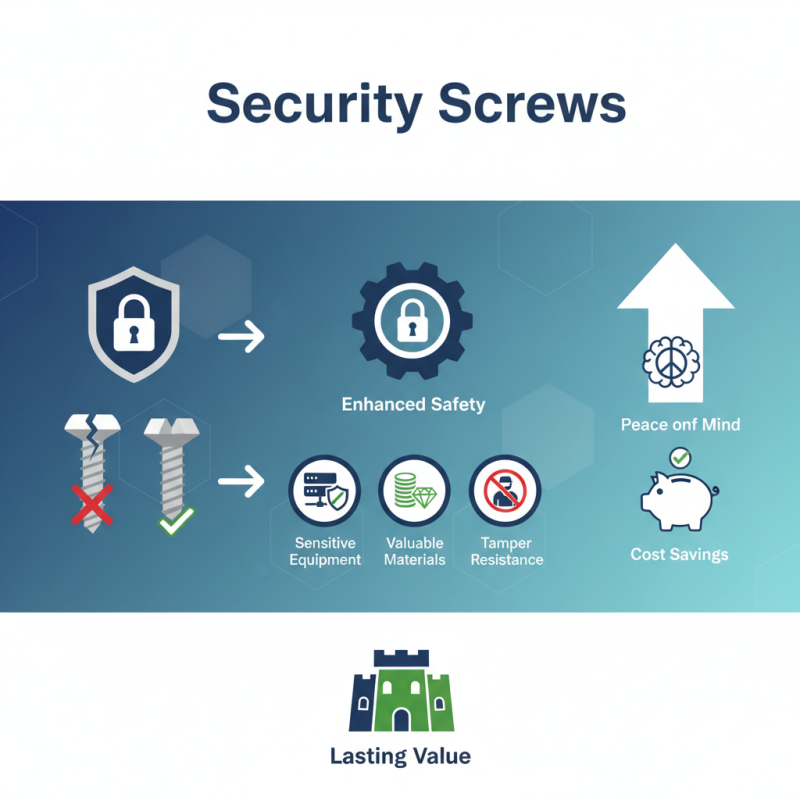
When embarking on a new project, security is paramount. The choice of fasteners can significantly impact the overall integrity of your installation. Renowned security expert Mark Johnson states, “Choosing the right Security Screws can make all the difference in protecting your assets.” This insight highlights the importance of selecting appropriate security screws for enhanced safety.
Security screws differ from standard screws. They are designed to resist tampering, making them ideal for high-risk environments. Projects that involve sensitive equipment or valuable materials should prioritize these specialized fasteners. Not using security screws could lead to costly theft or damage.
Reflecting on this, many overlook the significance of security screws. They may assume standard screws will suffice. However, the reality is that added protection is essential. In today’s world, investing in security screws can save more than just money. It can ensure peace of mind and provide lasting value to any project.
Understanding Security Screws: Definition and Types
Security screws provide an essential layer of protection for various projects. Understanding what they are helps in making informed decisions. Security screws are specifically designed to deter tampering and theft. They come in various types, each serving a unique purpose. Common types include tamper-resistant and tamper-proof screws. These screws often feature unique head shapes, preventing standard tools from being used.
When choosing security screws, consider the environment. Some materials resist corrosion better than others. Galvanized or stainless steel screws may endure harsh conditions. Remember, not all security screws are created equal. Each type has specific applications, so ensure it aligns with your project's needs.
Tips: Always assess the potential risks in your project area. Additionally, familiarize yourself with installation practices. Improper installation can negate the benefits of security screws. Lastly, don't be afraid to consult with experts. Their experience can guide you toward the best options for your security needs.
Benefits of Using Security Screws in Various Applications
Security screws offer a wide range of benefits across various applications. These specialized fasteners are designed to prevent tampering, theft, and unauthorized access. In industries such as construction and electronics, the need for secure fastening methods is crucial. According to a report from the National Institute of Standards and Technology, nearly 90% of hardware failures are due to improper fastening. This emphasizes the importance of using appropriate screws that can withstand both physical and environmental challenges.
One significant advantage of security screws is their versatility. They come in various styles, including pin-in-head designs and unique patterns that require specific tools for removal. In public installations and infrastructure, these features can deter vandalism and enhance safety. A study by the International Society of Automation revealed that the implementation of security screws reduced theft incidents by 35% in commercial properties. Yet, it is essential to assess the specific needs of each project to determine if security screws are the ideal choice.
Despite their many benefits, it’s vital to consider installation requirements. Security screws may demand specialized tools and training, potentially increasing project costs. In some cases, the added security may not be necessary for low-risk environments. Evaluating the balance between cost and security is essential. Every project must be carefully assessed to ensure that the chosen fastening method aligns with overall security goals.
Benefits of Using Security Screws in Various Applications
Comparative Analysis: Security Screws vs. Standard Screws
Choosing the right screws for a project can seem straightforward, yet the differences can significantly impact security and durability. Security screws stand out from standard screws. They feature unique designs that often require special tools for installation and removal, providing an extra layer of theft resistance. This makes them ideal for applications where unauthorized access is a concern, such as public infrastructures or sensitive installations.
Comparatively, standard screws are versatile and widely available. However, they can be easily tampered with due to their common designs. Anyone with the right tools has the ability to unscrew them, which raises security issues. In situations where safety is paramount, relying solely on standard screws may be insufficient. It is essential to assess the potential risks associated with your project and consider the level of security needed.
While security screws offer superior protection, potential downsides exist. They may require specific installation techniques that could complicate your project. Additionally, availability can hinder quick replacements. Weighing these factors against the enhanced security they provide is crucial for making a well-informed decision. Understanding the trade-offs can aid in selecting the best fastening options for your needs.
Installation Techniques for Optimal Security Screw Performance
When using security screws, the right installation techniques play a crucial role. Proper choices can enhance both security and functionality. For optimal performance, it’s essential to use the correct tools and follow precise methods.
One effective technique involves pre-drilling holes. This step ensures that screws fit snugly, reducing the chance of stripping. Use a drill bit slightly smaller than the screw’s diameter. This method can help maintain the integrity of the surrounding material.
Tip: Always keep the screws aligned. Misalignment can lead to weak connections and potential vulnerabilities. After installation, regularly check screws for tightness. Loose screws can compromise security over time.
Additionally, it’s wise to use a torque wrench when tightening. This tool prevents over-tightening, which might damage materials. Improper tension can lead to failure in security applications.
Tip: Consider using thread-locking compounds for added security. These compounds can resist vibration and prevent loosening. However, remember that it can make future removal more challenging. Reflecting on balance is key—security versus accessibility.
Factors to Consider When Choosing Security Screws for Your Project
When selecting security screws for your project, several factors warrant careful consideration. The material of the screws is one critical aspect. Stainless steel screws offer high corrosion resistance. According to industry reports, projects exposed to harsh environments benefit from this durability. In contrast, carbon steel screws are more cost-effective, but they sacrifice longevity.
Another pivotal factor is the design of the screw head. Unique shapes, like the spanner or pentalobe, deter unauthorized access. A study published by the Security Industry Association indicates that using specialized screw designs can reduce tampering incidents by up to 40%. However, accessibility for maintenance can become an issue, as these non-standard heads may require specific tools.
Moreover, consider the screw length and diameter based on the materials being joined. An ideal fit ensures optimal strength. Data from the Fastener Quality Act suggests that improperly sized screws can lead to failures, including loosening and breakage. In practice, achieving this balance is not always straightforward. Project managers must weigh the benefits of security features against the project's practical needs. The decision-making process can often feel overwhelming, requiring a thoughtful approach to ensure both safety and effectiveness.
Why Choose Security Screws for Your Next Project? - Factors to Consider When Choosing Security Screws for Your Project
| Factor | Description | Example Use Cases |
| Material | Choose corrosion-resistant materials such as stainless steel for longevity. | Outdoor installations, marine applications. |
| Head Type | Select head types that are difficult to tamper with, like pin-in-head. | Public access panels, secure enclosures. |
| Drive Style | Consider drive styles that require special tools, limiting access. | Security installations, areas needing authorized access only. |
| Length | Select appropriate lengths to ensure a secure fit without protruding. | Heavy-duty fixtures, equipment anchoring. |
| Finish | Choose finishes that provide extra protection against wear and tear. | Electrical boxes, outdoor furniture. |
